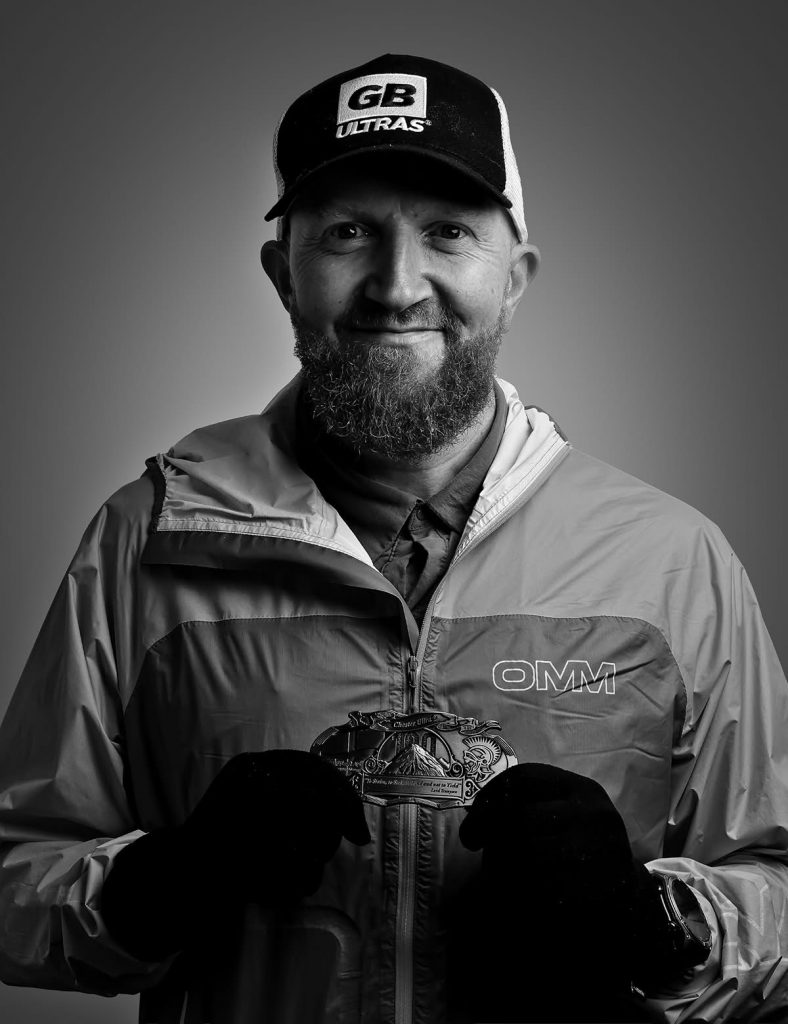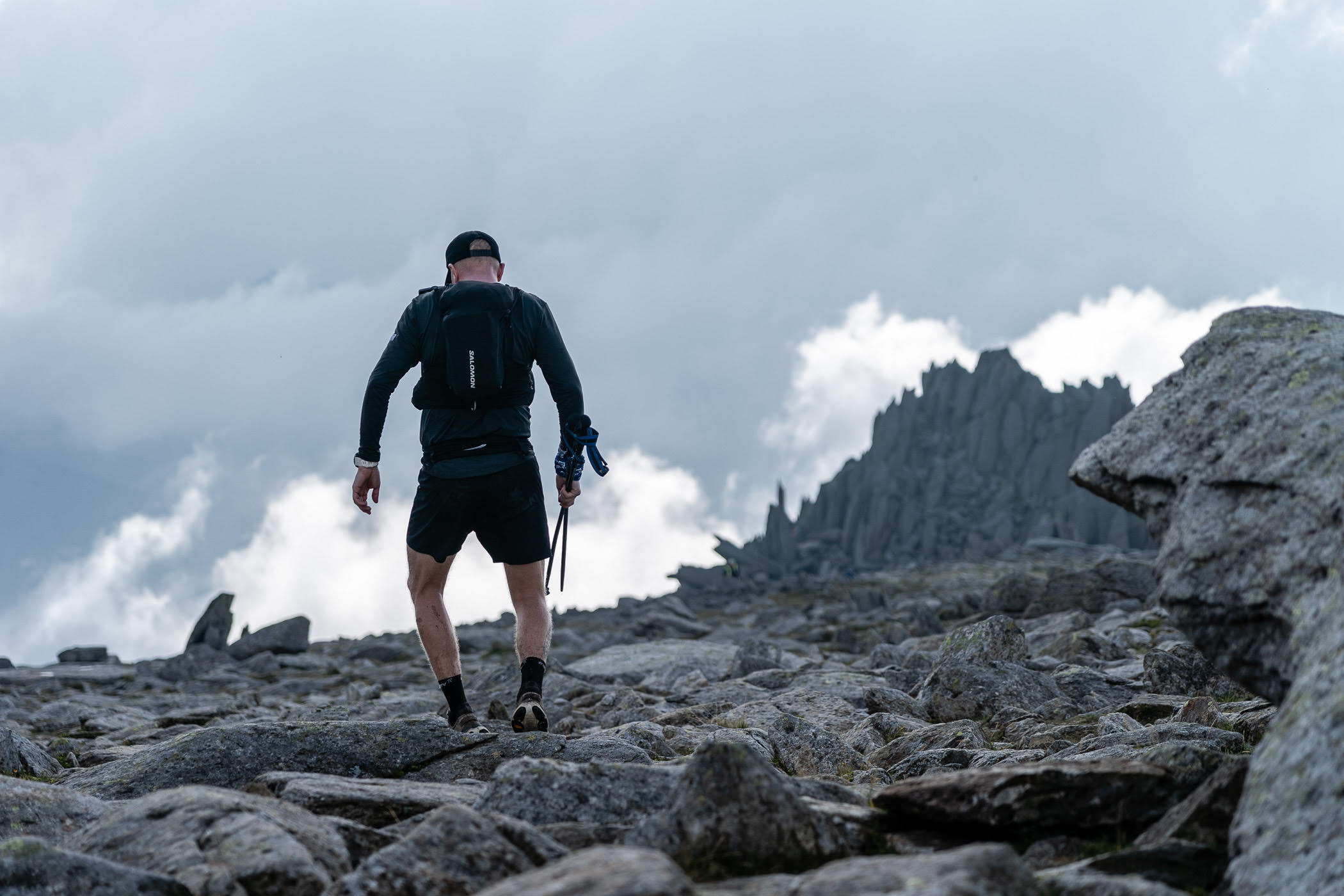

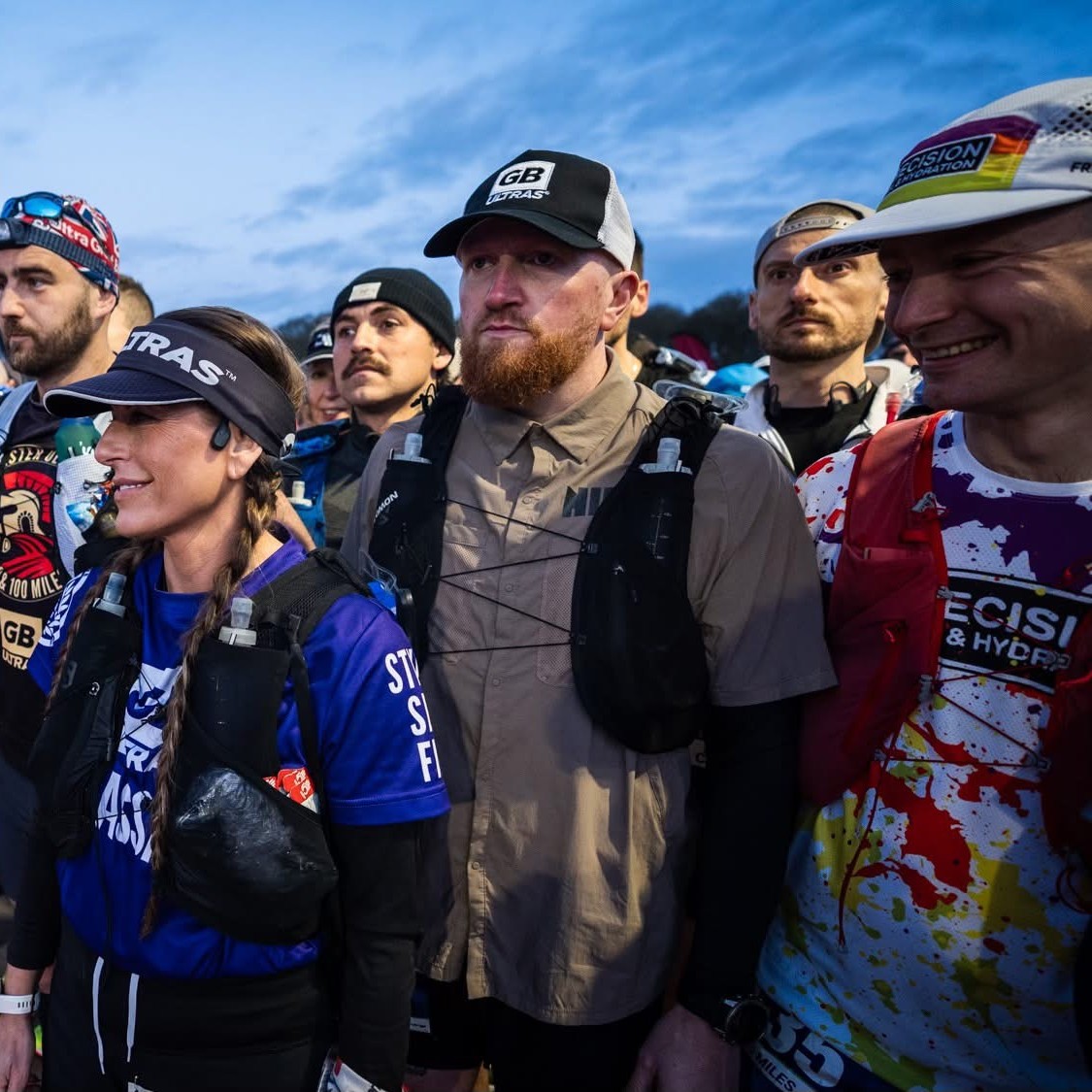
Four years. Same start line. Same canal paths, the same Sandstone Trail, the same brutal final miles through the Gowy. But this year felt different before I’d even arrived at the start line. Year four of the GB Ultras Chester 100 wasn’t about surviving it or just getting round. This time, I had a number in my head: 21 hours something. And I genuinely believed I could do it.
This is how it went, what worked, what didn’t, and what you can take away whether you’re thinking about your first 100-miler or trying to knock time off your own 100 miler.
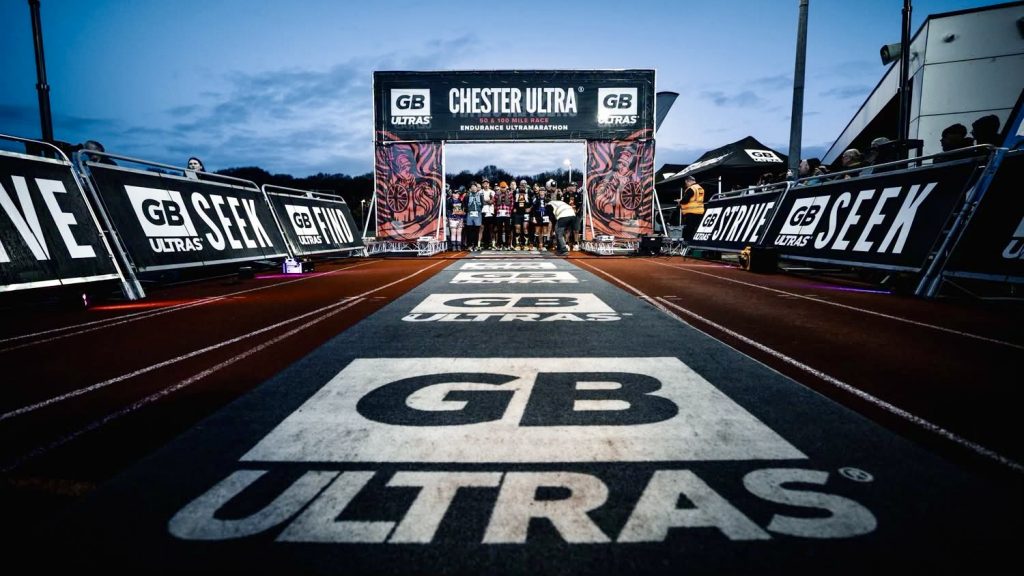
The Race: What Is the Chester 100?
The Chester 100 is a GB Ultras event that starts and finishes at Ellesmere Port Sports Village in Cheshire. It covers 104 miles of mixed terrain including canal paths, the Sandstone Trail, riverbanks, fields, and road. It takes in the Bridgewater Canal, the Trans-Pennine Trail, and the North Cheshire Way, with around 1,500m of elevation gain across the course.
This year the field was over 300 runners, the biggest yet, and the standard keeps rising. It’s a well-marked route, brilliant checkpoints, and the GB Ultras volunteers are genuinely next level. If you’re looking for a well-supported 100-miler with a real community around it, this one is hard to beat.
The Plan Going In
My race plan this year had three clear phases:
- Miles 0–60: Self-sufficient. Run my own race, use the checkpoints efficiently, don’t hang around.
- Miles 60–finish: My brother Ric would crew me through the dark hours.
- Miles 60–finish: My friend Dan would pace me to the finish line, something I’d never had in a race before.
I’ve never used a pacer before. But I’ve learned that in the final 40 miles of a 100, your brain starts negotiating with itself. Having someone there to think for me, to keep me accountable, to make decisions when the mental side takes over, that was the reasoning. And it turned out to be one of the smartest decisions I made.
My target was a 21-hour something finish. My previous best was 22:36. I knew it was achievable. I’d trained for it. But ultras have a habit of humbling you.
The Kit
Mandatory kit: OMM waterproof, Silva primary head torch, Black Diamond backup, Gymshark base layer in a dry bag, bivi bag, whistle, and 2 x 500ml flexi flasks.
Race kit: Nike Trail button-up shirt and shorts, Hoka Clifton 10s (light and fast for the early miles), Salomon Adv. Skin 12 vest, GB Ultras trucker cap, and SunGod 42 shades.
Drop bag: Spare kit, spare nutrition, and a change of shoes to my 361 Degree Taroko 5s for the second half where comfort was needed.
Nutrition: Precision Fuel & Hydration gels, chew bars, and carb drink, supplemented with real food at checkpoints. The strategy was simple. Eat something every 30 minutes without fail.
Race Day
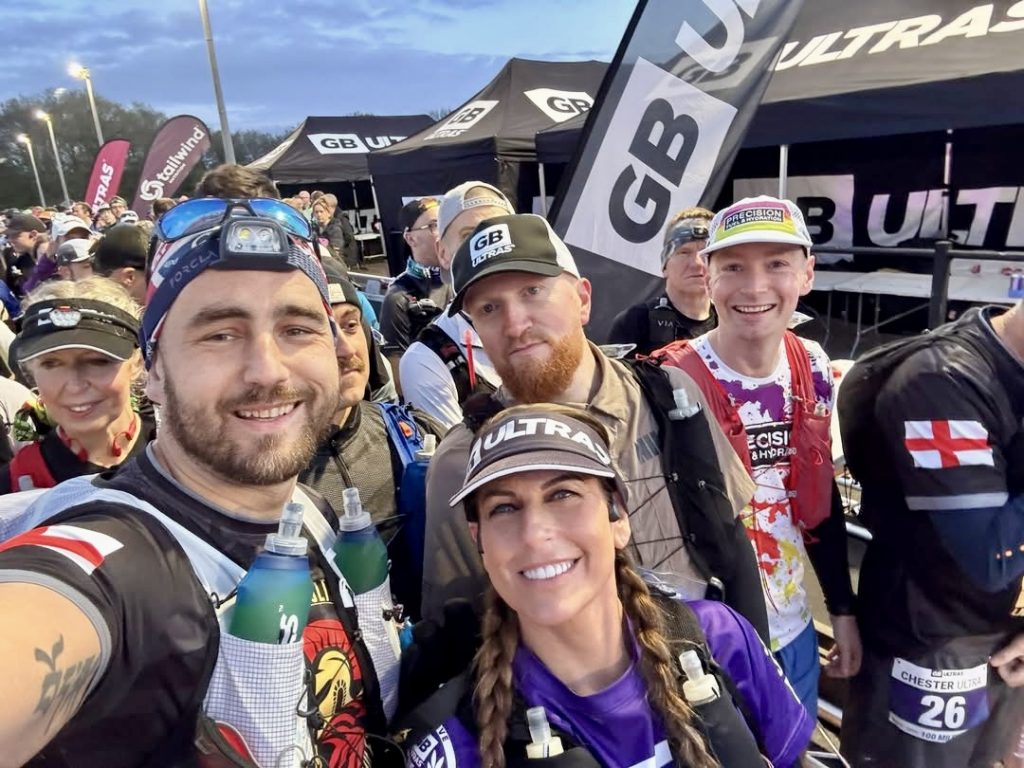
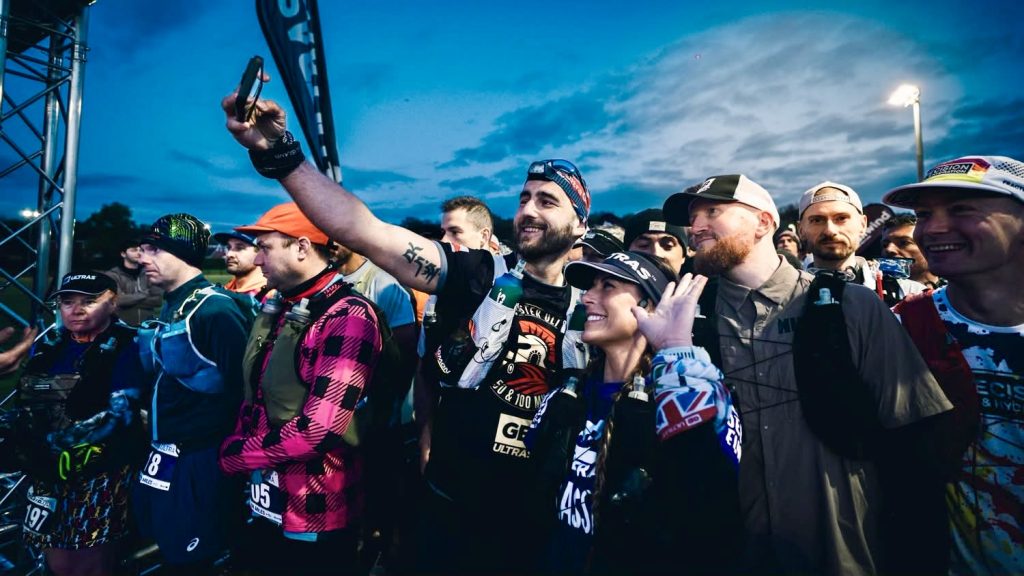
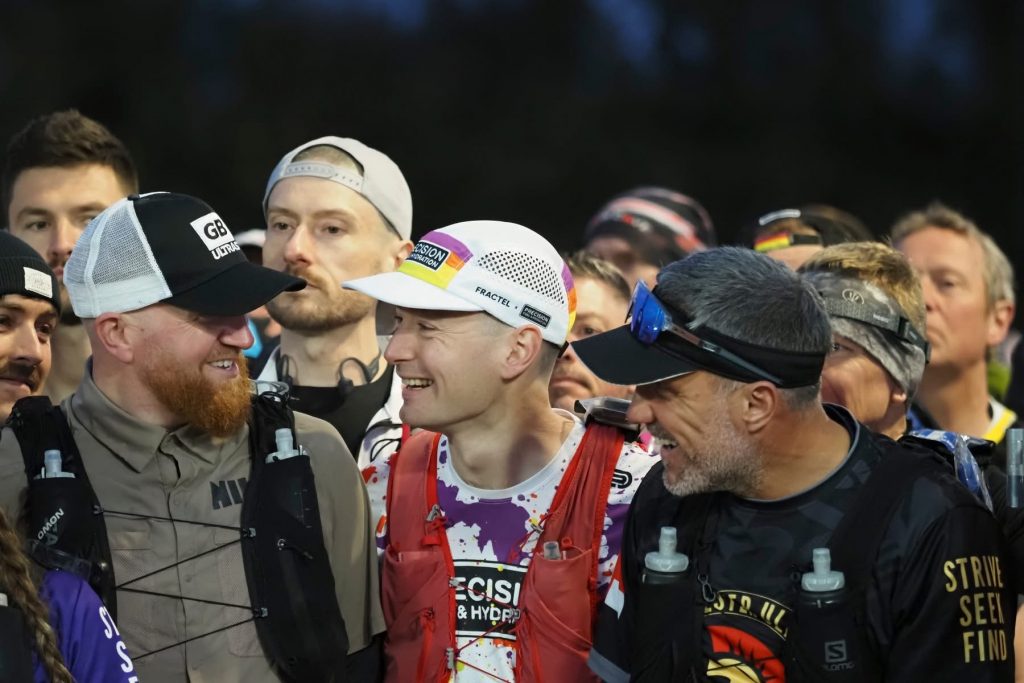
The Start, 6am, Ellesmere Port
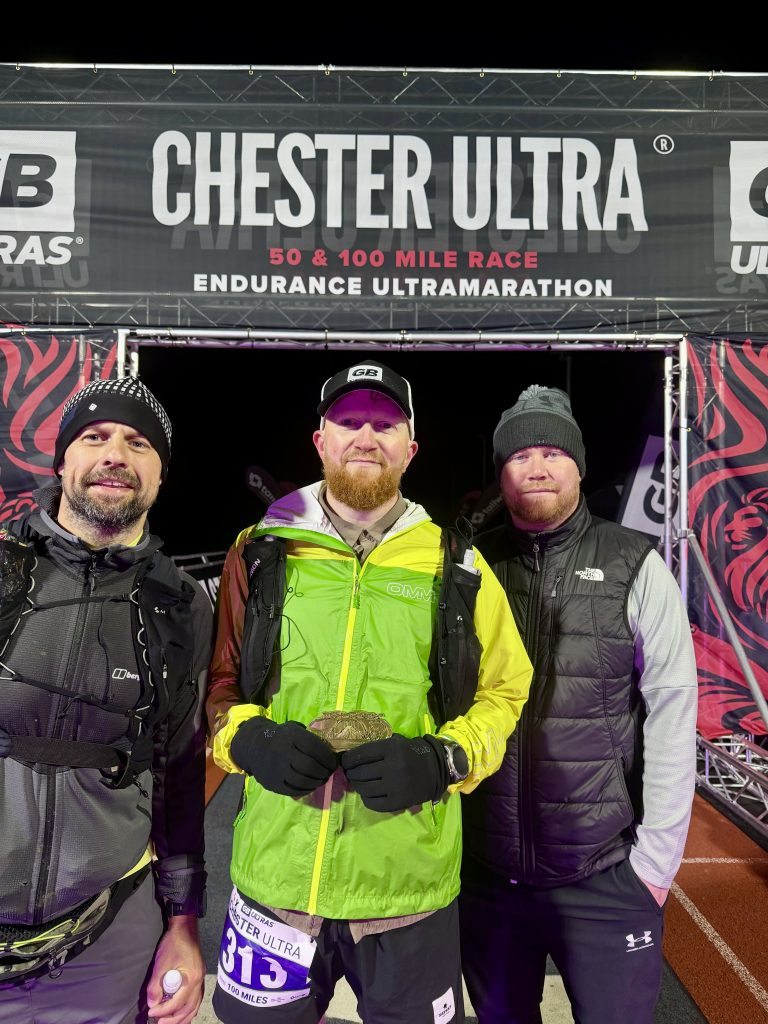
Alarm at 3:45am. On the road by 4:45am. We arrived with plenty of time, I was registered, had my bib (313) and tracker, and was taking in the atmosphere by 5:20am.
There was a moment before the start that cut through the noise. We paid our respects to Dave Parrish with a minute’s silence. Dave was a phenomenal ultra runner, race wins, FKTs on brutal routes, and just by all accounts a brilliant fella, who tragically lost his life recently while running in the Scottish mountains raising money for charity. A reminder, as if we needed one, of what this community means and what running in the mountains can cost.
At 6am, 300-plus runners set off through the quiet streets of Ellesmere Port. I made a conscious effort to go out slower than previous years. Protect the legs. Let the race come to me.
Miles 0–27: Canal Paths and Controlled Effort
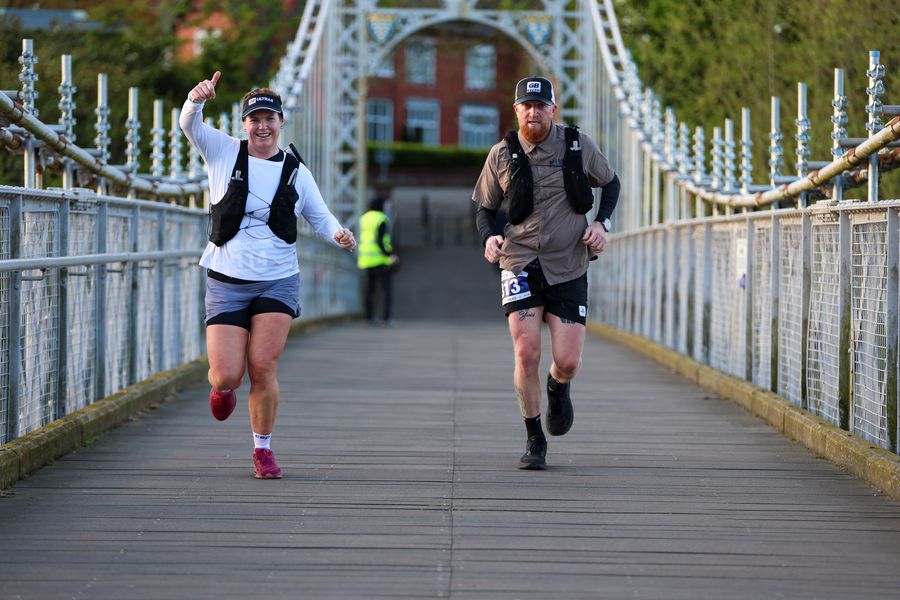
The first 9 miles into Checkpoint 1 in Chester were all canal path. Easy going. I ran with Caroline, who I’d spent a chunk of the 2025 race with, as we looped Chester into CP2. No stops at either checkpoint. I didn’t need anything yet. That was by design.
CP2 to CP4 in Beeston continued along the canal before opening up onto trails after Waverton. The sun was out. It was starting to get warm. Fuelling was on schedule, gels or chews every 30 minutes. I hit CP4 at 27 miles feeling efficient and moving well.
Miles 27–51: The Sandstone Trail and the Halfway Mark
CP4 to CP5 Delamere is 13 miles along the Sandstone Trail, and it’s the section I enjoy most. Scenic, varied terrain, gradual incline. You share the trail with walkers on a day like this, it almost feels cruel to be moving that slowly through such a beautiful landscape and still be suffering.
I chatted with a few first-timers on this section, sharing what to expect once darkness falls. That exchange matters. It costs you nothing and means everything to someone doing their first 100.
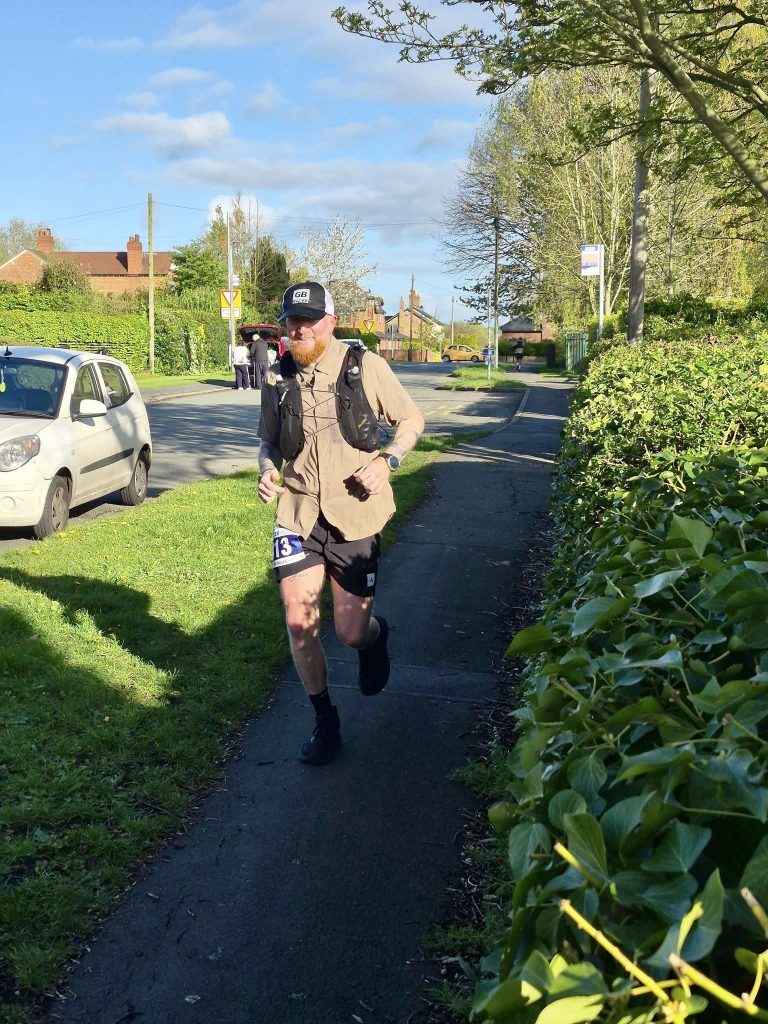
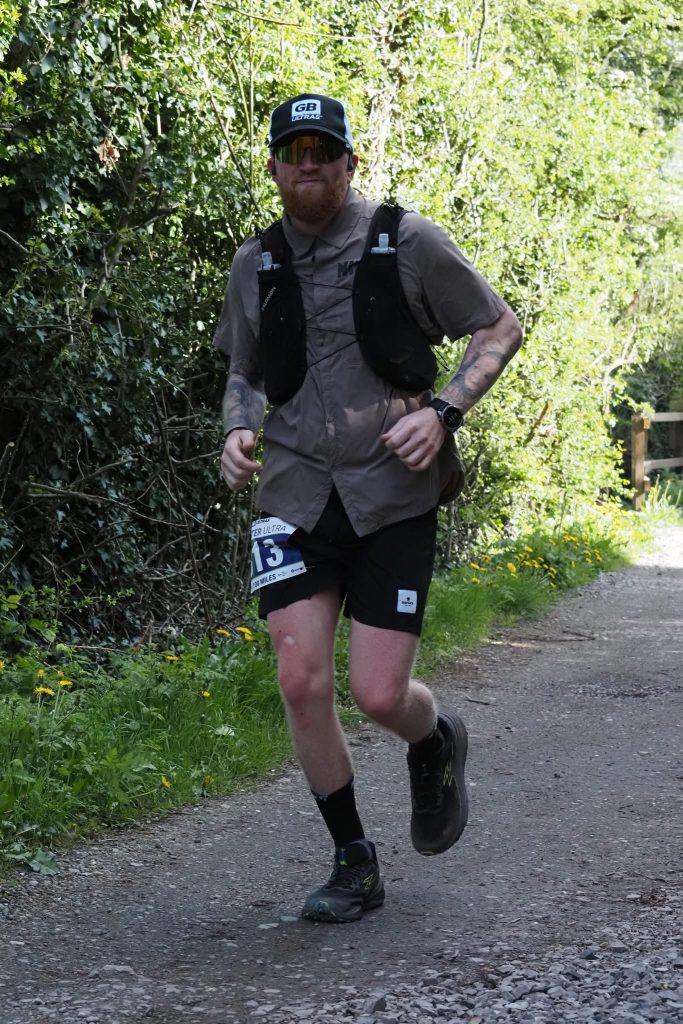
CP5 to CP6 Frodsham brought the midday heat. At Frodsham I had my drop bag. I changed my socks and trainers, had some soup, tea, and snacks, and spent a deliberate 8–10 minutes resetting. My mate Ant had come out to support with his daughter, we walked through Frodsham together, eating and drinking, still moving forward. It’s the little things.
This year there was a diversion past the halfway point due to a fallen tree, routing us along the opposite side of the River Weaver, new territory I hadn’t recced before. And somewhere along here, I spotted two runners a few hundred metres ahead being chased by cows. A little laugh goes a long way at mile 50.
I hit the halfway mark in good shape and with time firmly on my side.
Miles 51–76: Crew In, Confidence Up
CP7 Preston Brook was a quick refuel stop. I was roughly an hour and a half ahead of my previous year’s pace. Still comfortable. Still moving. As I left, Caspian, the race leader, was arriving for his second visit, already 20 miles ahead. The maths in my head said course record. Superhuman doesn’t cover it.
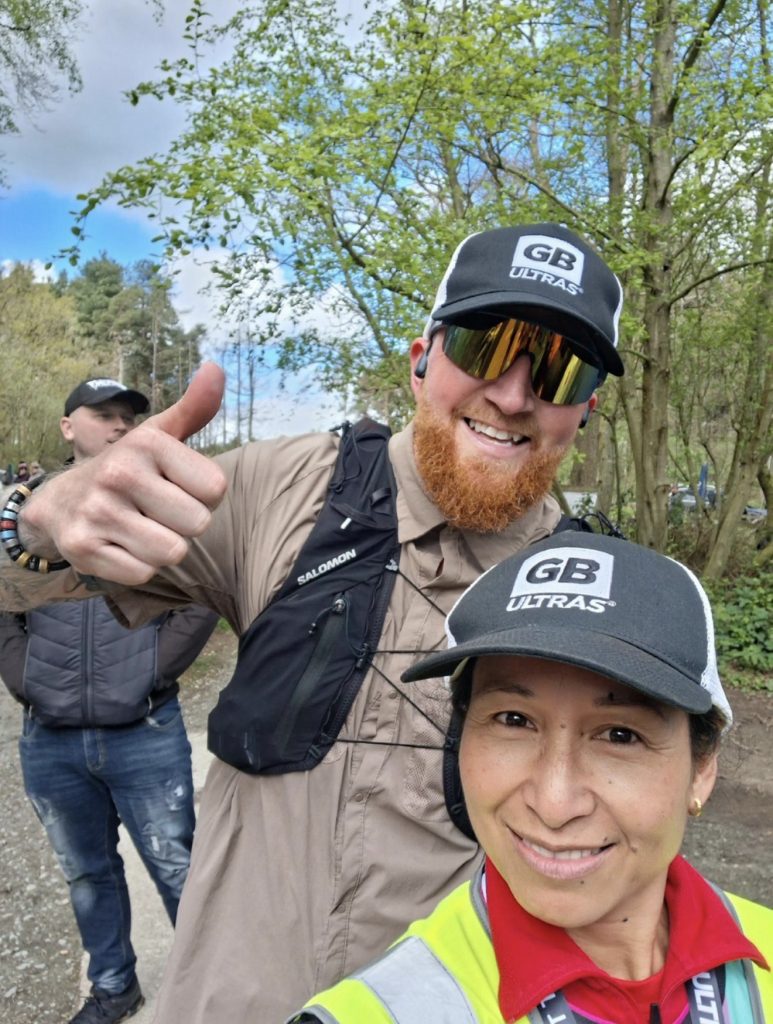
From CP8 Stockton Heath onwards, Dan joined me as pacer, and we chatted strategy as we ran to meet my family and Ric. Seeing friendly faces after 60 miles of running solo gives you a shot of something that no caffeine gel can replicate.
Dan’s plan for me was simple, run for half a km, walk for 30 seconds. Structured. Measurable. Just enough to keep the engine ticking without blowing up. We implemented it immediately and started making real time on the trail to CP9 Spike Island.
My goal was to reach Spike Island before dark. In previous years I’d arrived just after sunset. We got there well before. I knew at that point the goal was on.
Miles 76–90: Into the Dark
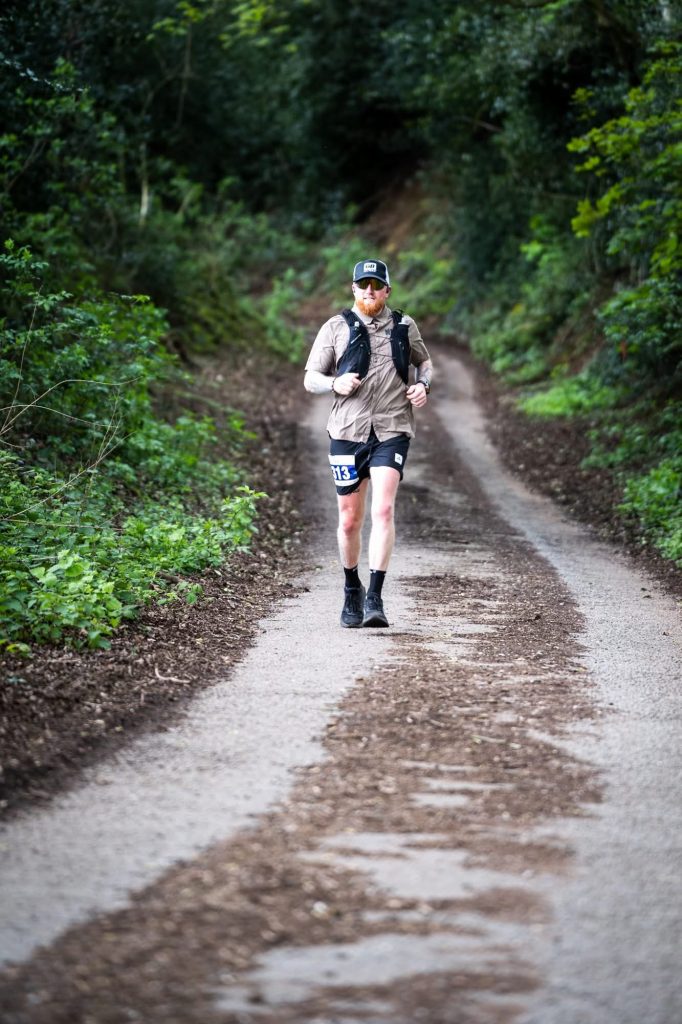
I put on a coat and gloves at CP9 and slipped on my headlamp before leaving, no messing around mid-route. We stuck to the same pacing strategy back to CP10 Preston Brook. I didn’t need the headlamp until two miles out from the checkpoint.
At 76 miles, back at Preston Brook for the second time, bottles refilled, pockets stuffed with food, then into the dark. It was bitterly cold now. Movement meant warmth. So we ran.
On the section back to Frodsham we intentionally slowed slightly, footing placement in the dark on uneven ground demands respect. But we got there. Ant and Ric were waiting. Hot soup. A cup of tea. A brief reset.
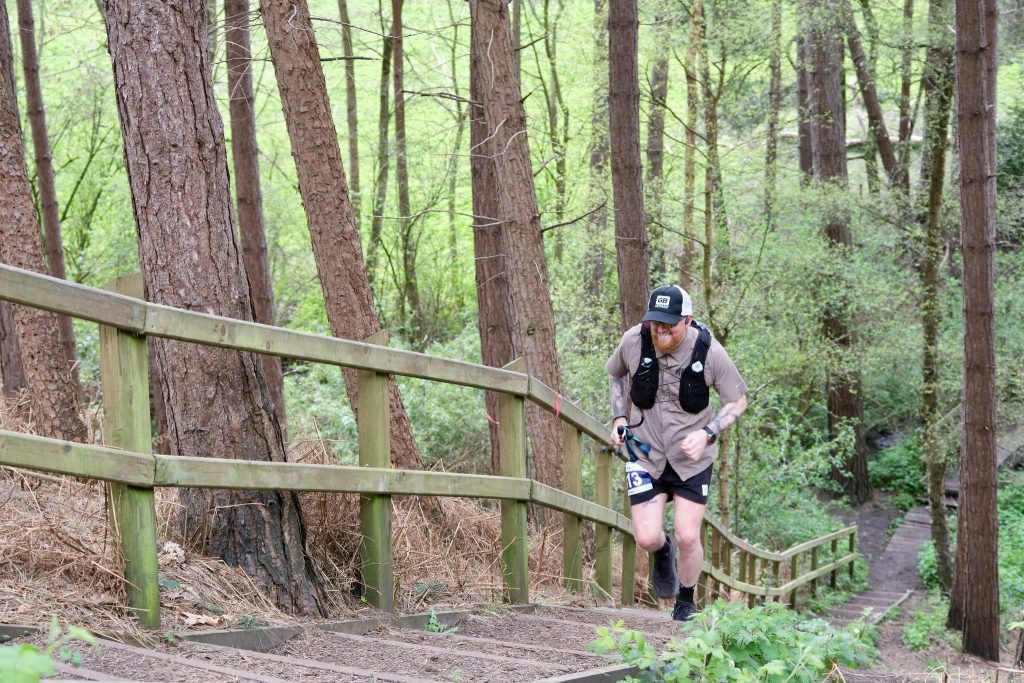
Then it was up through Frodsham forest and Helsby Hill. Difficult in the dark for the uninitiated, but I’ve recced this section so many times I could navigate it in my sleep. We moved quickly.
Miles 90–104: The Final Push
CP12 in Alvanley arrived at 90 miles. One more push. But this is where the body starts to negotiate terms.
I was struggling to eat now. The motion of running all day had made me nauseous. My stomach wanted nothing. A coffee at the final checkpoint for a caffeine kick, a few words with the volunteers, and then back out into the dark.
The strategy now, keep moving forward. Don’t stop. Make sure we finish ahead of my previous best.
Low points came and went, as they always do at this stage. The key is knowing they’ll pass. They always pass.
My ETA was showing 3:39am. That would be a 21-hour something finish. As long as I kept it below 4am, I had my goal.
The Gowy: Where Races Go to Die
The final section is roughly 6 miles of road, 2 miles of fields, 3 miles of canal, and then the streets back to the Sports Village. Oh, and the track. But the section that catches people out is the Gowy.
The Gowy is notoriously difficult to navigate in the dark. You can go wrong multiple times, end up wet, and completely unravel mentally if you’re not prepared. I’ve recced it more times than I can count. But this year, the mist had dropped hard in the early hours of the morning.
We found the first bridge. On the opposite bank, through the mist, a line of 8 or so runners were backtracking, they’d missed the bridge and ended up on the wrong side of the water. The Gowy had claimed more victims. We pushed on, dodging sleeping cows in the dark, until eventually the road came into view.
Four miles to go.
The Canal, the Finish, and 21:45:52
We crossed the M56 bridge and dropped onto the canal path, the same path I’d run 20 hours earlier in the opposite direction. That feeling is almost impossible to describe. 100 miles. On foot. In 20 hours. Nearly there.
We teamed up with Ryan along the canal. Run, walk, shuffle. When you’re this close to the finish, it gets harder, not easier. Your body has already done 100 miles. But there are 4 miles left. If you don’t plan for those 4 miles, they can break you mentally.
Bridge 144. 1 mile and 400 metres to go.
We hit the streets of Ellesmere Port at 3:15am. My head told me I could walk the final mile and still hit my target. So, I did. We talked about previous races, future races, and the peculiar madness of voluntarily running 100 miles through the night.
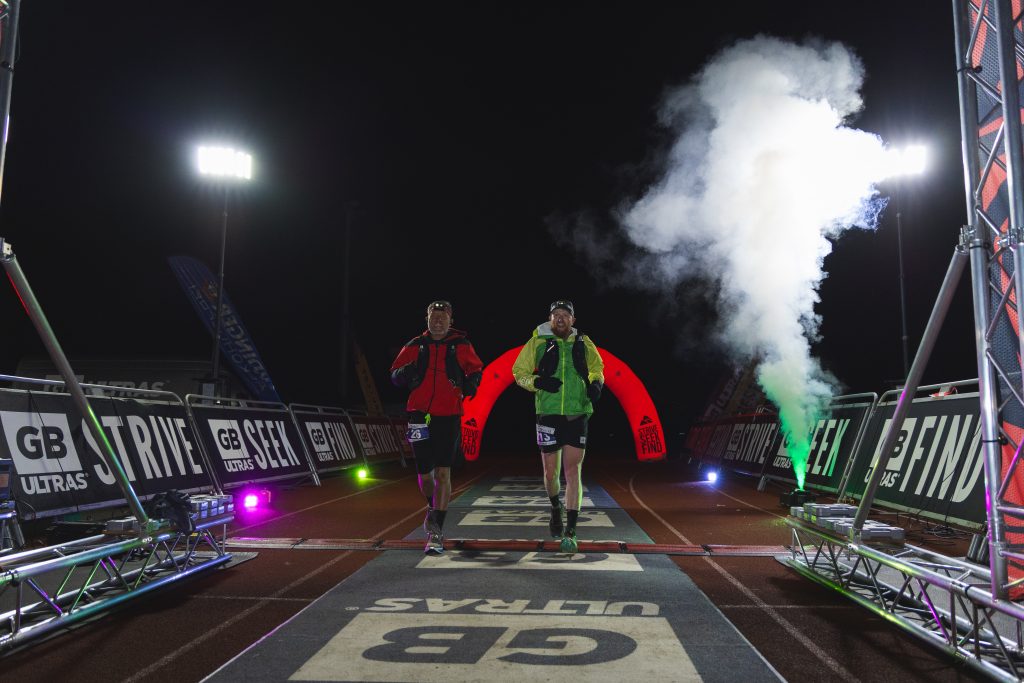
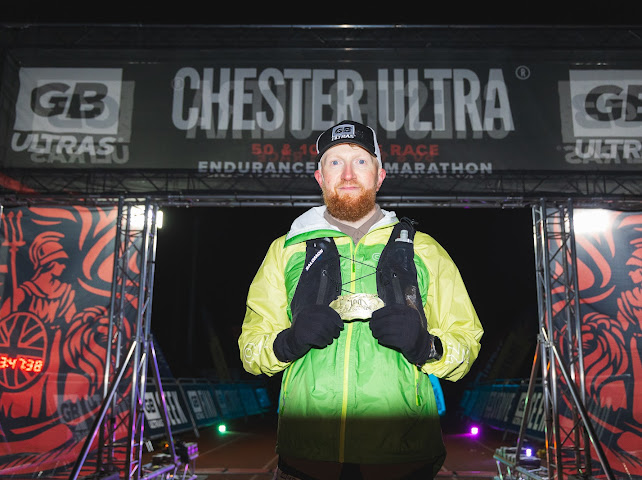
We arrived at the Sports Village to applause from the GB Ultras team and volunteers. Even at 3am in the morning, the support never drops. “Just a lap around the track”, yeah, thanks Emma!
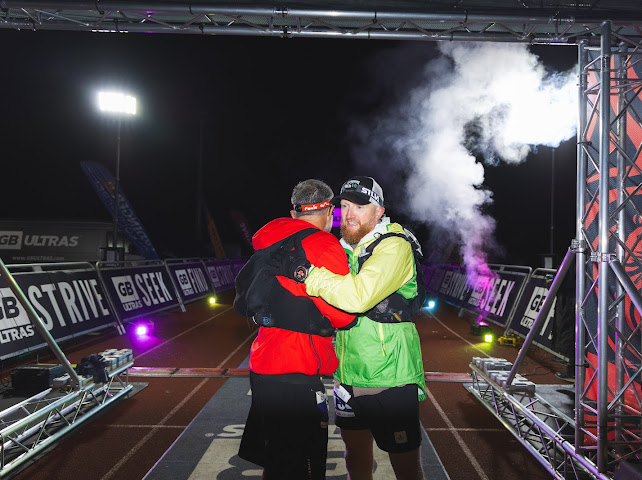
We ran the 400m. We finished.
What Made the Difference: Key Takeaways
It’s rare that a race plan actually goes to plan in an ultramarathon. This one came pretty close. Here’s what I think made the biggest difference:
1. Be Ruthlessly Efficient at Checkpoints
Time spent sitting in a checkpoint is time you’re not banking towards your goal. Know what you need before you arrive. Get in, refuel, get out. The exception is a deliberate, planned reset, like the 8–10 minutes at Frodsham with my drop bag. That was intentional and scheduled. Everything else was kept to minutes if not seconds.
2. Eat Something Every 30 Minutes
Without exception. I don’t care if you don’t feel hungry. You don’t eat to feel satisfied; you eat to stay ahead of the energy debt. Precision Fuel & Hydration gels and chews gave me consistent energy through the first 90 miles. It was only past that point, with the nausea setting in, that nutrition became a battle. Stay on top of it early and it’s a much smaller fight later.
3. Pack Light
Every ounce you carry is a weight you’re moving for 100 miles. Think hard about what you actually need versus what’s just comfort. A lighter pack means a faster runner.
4. Run Every Opportunity
When the terrain allows it, run. Don’t drift into a default walk just because you’re tired. It’s very easy to climb over a style or pass through a gate and just walk for a few minutes. Don’t. Walk the uphills and the technical bits if you want. Run everything else. The kilometres add up faster than you think.
5. Try a Pacer
I’d never used a pacer before this year. In those final 30–40 miles, your brain is desperate to negotiate rest, shortcuts, and excuses. Having someone alongside you who’s thinking clearly, keeping the strategy on track, and simply being present is worth more than any amount of fitness. It saved mental energy I needed for moving forward.
6. Know the Route
Particularly the Gowy. Recce the sections that can go wrong. Running a new route in the dark with no energy and compromised decision-making is a recipe for a DNF. Know where you’re going before race day.
Final Thoughts
Strong for 90 miles. Determined for the next 13. And the final mile was the hardest, as it always is. That’s 100 miles for you. It never gets easy. You just get better at managing the hard.
If you’re thinking about stepping up to a 100-miler, or you want to improve your time, or you just want an event that’s brilliantly organised with a community around it that genuinely lifts you, the Chester 100 is for you. Look out for entries into next year’s race.
I might just see you on the start line. Again.
The Stats
Total Distance: 104 miles / 166.5km
Elapsed Time: 21:45:52
Average Pace: 11:40/mile | 7:15/km
Total Elevation Gain: 1,597m
Total Calories Burned: 13,578 kcal