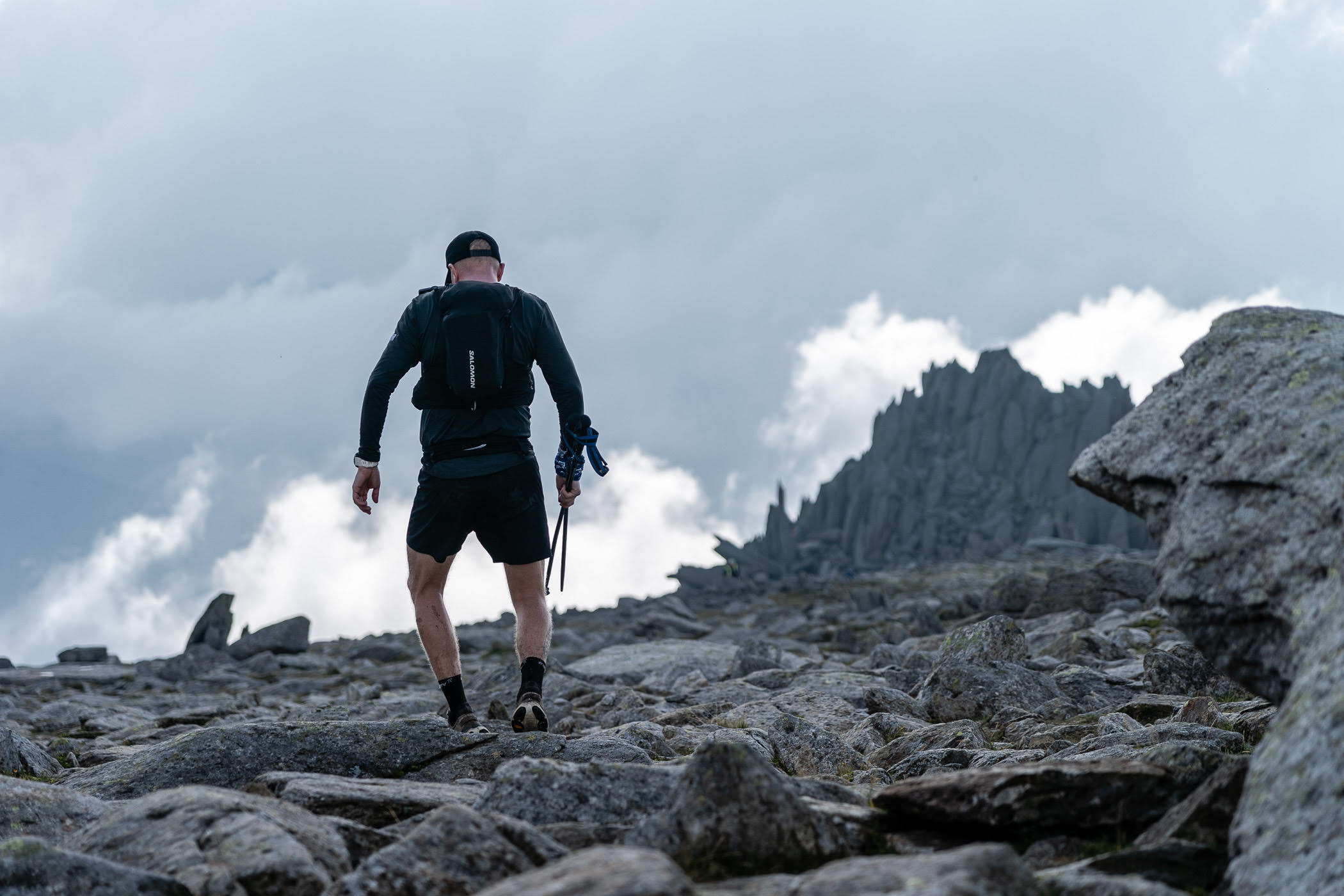

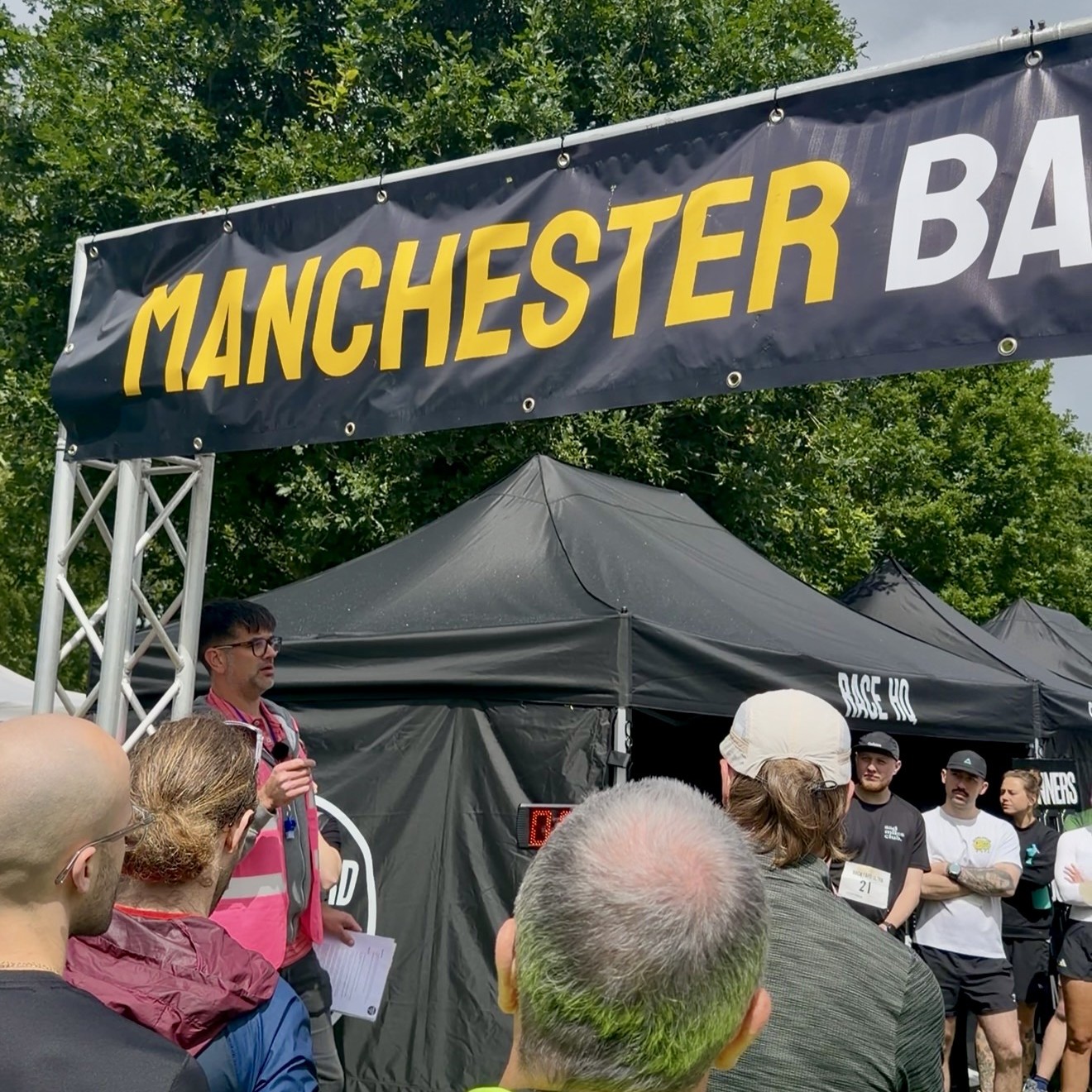
13 June 2026. Giants Seat Scout Camp, Radcliffe. My third crack at the Manchester Backyard Ultra and the one that possibly taught me the most.
If you’ve never done a Backyard Ultra before, here’s the short version: everyone lines up at the same start line, runs a 4.16-mile loop, and has to be back before the hour’s up. Then you do it again. And again. Forever, or until you can’t. There’s no finish line. There’s just the clock, the loop, and you deciding when enough is enough. Sounds simple. It isn’t.
This was my third time on this start line. This year it had been shunted from its usual October slot to June, different season, same brutal format.
Setting Up Camp
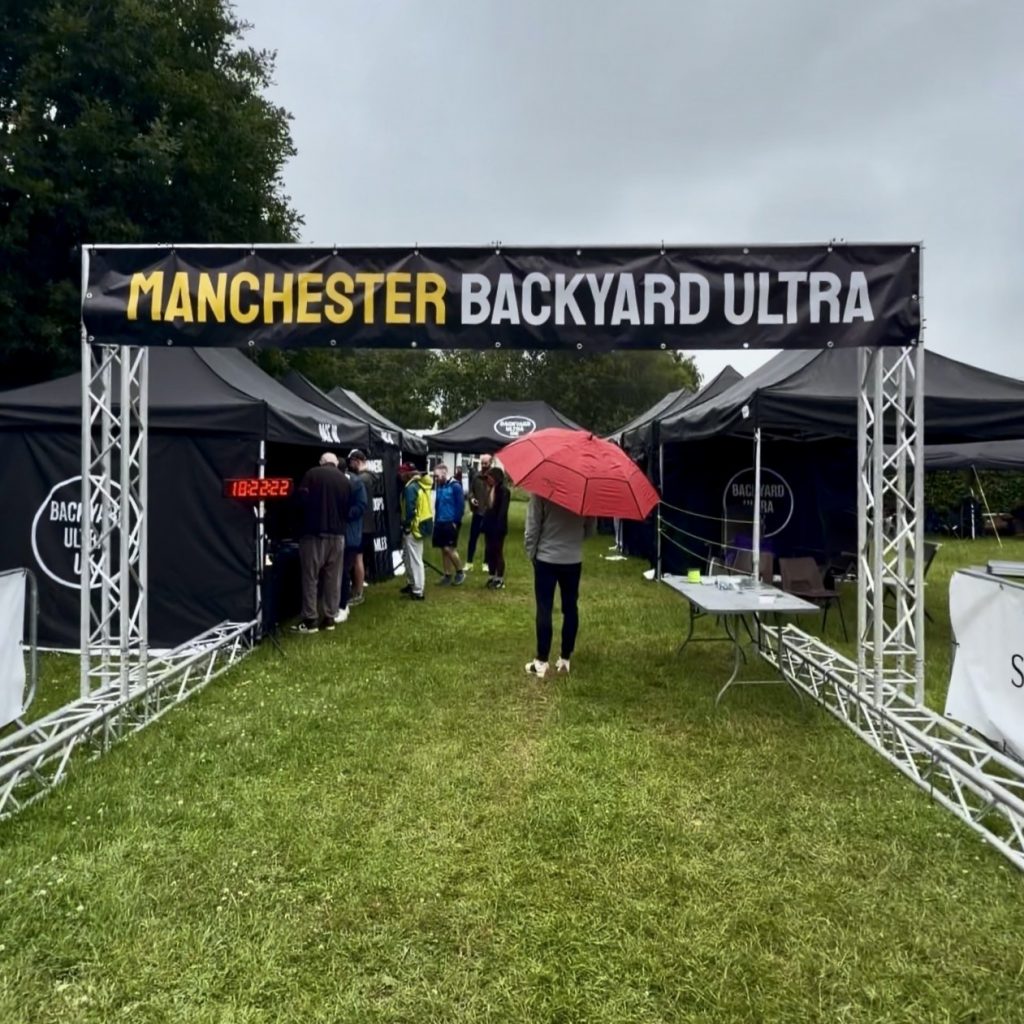
I rolled in for 9:30am to get my pitch sorted, and the place was already heaving. By the time I’d found a spot, I was further from the starting corral than I’d have liked, a decision that would come back to bite me later (more on that further down).
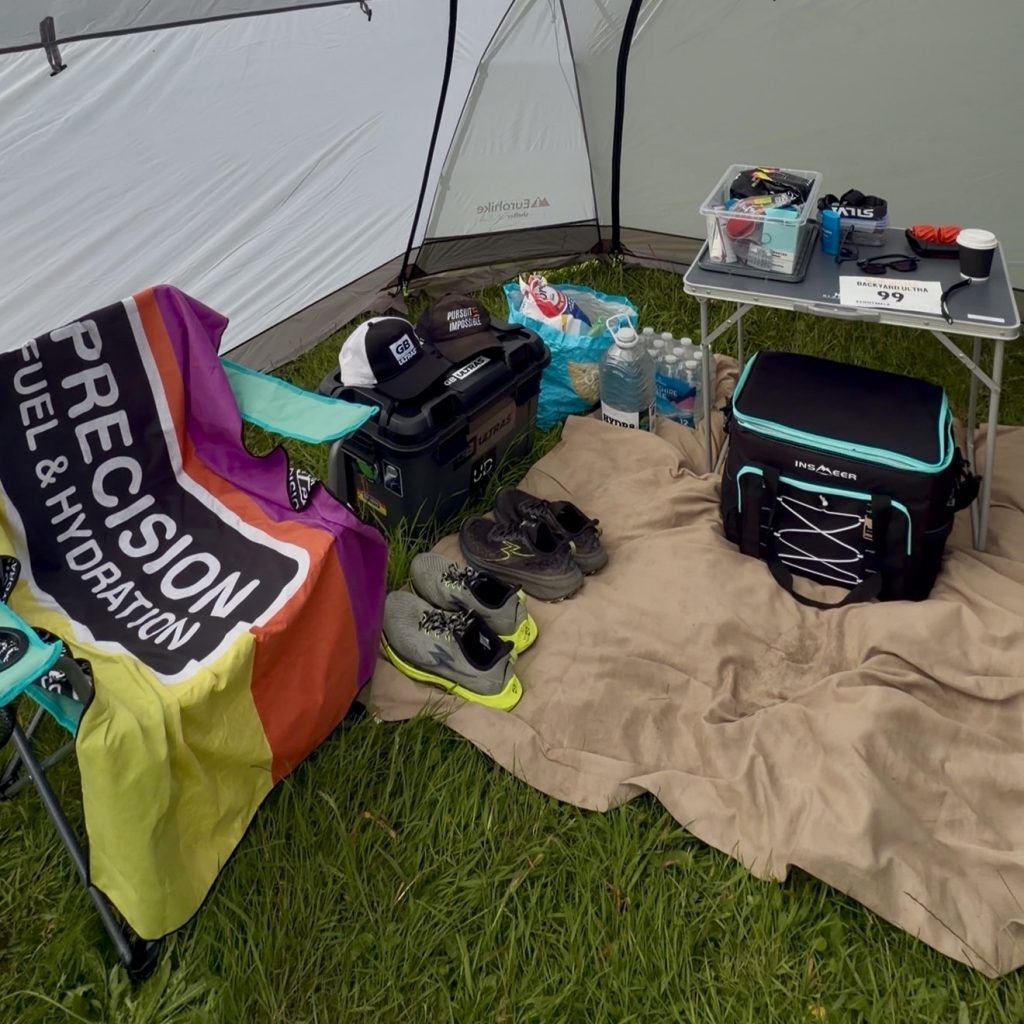
My setup itself was a serious upgrade from previous races. I’ve gone from a one-man shelter you could barely swing a gel wrapper in, to a full 6-man event shelter with a table, chairs, and enough food and drink to be completely self-sufficient for as long as I needed to be out there. If you’re planning your own backyard attempt, don’t underestimate this bit, your camp is your pit stop, your kitchen, and your sanity check all rolled into one. Get it right and it pays you back every single hour.
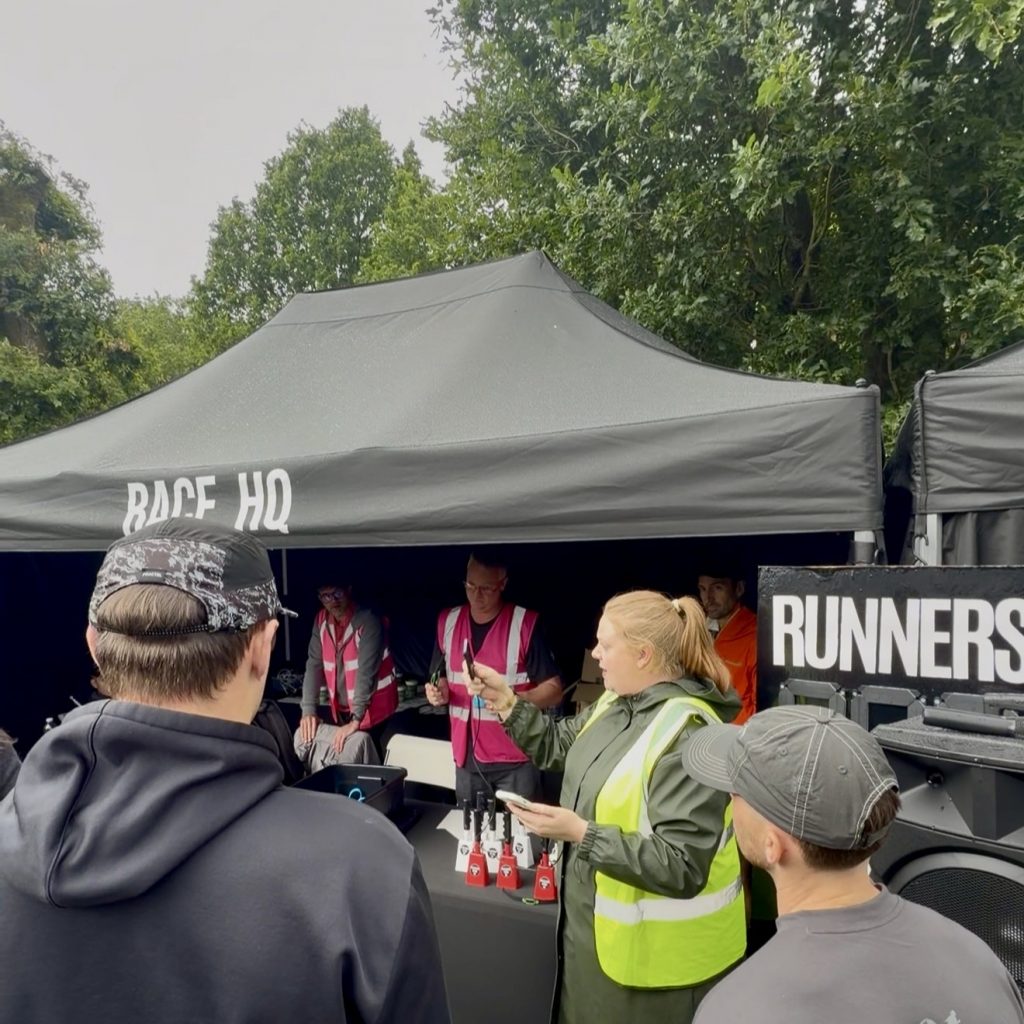
Registration was around 11am, briefing at 11:30, and right on the dot at 12pm, 123 of the 150 starters set off on Yard 1.
Early Yards, Settling In
First yard done in just under 42 minutes. Comfortable. For the first 6 or 7 laps I ran alongside a mate, and those early yards just flew by, easy chat, easy pace, the calm before the inevitable storm. That’s the trap with backyard ultras, the start feels so manageable that it lies to you about what’s coming.
By yard 8, people had already started dropping, but I got a lift I wasn’t expecting, family and friends turning up out of nowhere for a surprise visit. My mate Alana even brought McDonald’s. If you ever needed proof that ultra running is half effort and half morale, a cheeky Maccies at hour 8 of a multi-day race is it.
Night Shift
Yard 10 brought the head torch instruction, and between 10 and 11pm darkness properly dropped. By this point the field had thinned from 123 to around 90. I stuck my headphones in, loaded up an audiobook, and settled into the rhythm that gets you through the night, head down, loop after loop, chapter after chapter.
Yard 12 hit at midnight, 50 miles done, 79 runners still in it. I still felt fresh, not tired exactly, just steadily working, and my splits were holding nicely.
Then the strangest part of any backyard ultra, the night just disappears. One minute it’s pitch black, the next you can see the first hint of sunrise creeping in around 3:30am. That’s when the 100km mark, ticked over, and the field had been cut right down to 36.
Sunrise and the 24-Hour Push
By 5am the sun was properly up, and with it came a second wind. Any tiredness I’d been carrying melted away and I was genuinely excited about pushing on past the 24-hour mark.
At 8am my good mate Dan turned up to take over support duties, and that’s when the first hint of trouble showed, though at the time I wrote it off as jet lag from a holiday the week before. Yard 20 done. My average yard time was still sitting around 43 minutes and quicker than the conservative 50-minute pace I’d planned for, and my heart rate was low. Everything felt easy. That should have been the first clue.
The Warning Sign
Yard 21 is where this race actually became a different race.
I went for a wee and it was the colour of strong tea. I’d never seen it like that before, and it stopped me in my tracks. This is something I don’t talk about much, but I live with CKD Stage 3, Chronic Kidney Disease. I don’t bring it up often because I refuse to let it become the excuse I reach for when things get hard. But sitting there at hour 21 of a backyard ultra, it wasn’t something I could ignore.
I ran through the mental checklist, had I drunk anything that could explain the colour? No. Any pain in my back or kidney? No. Thirsty? Not really. Feeling sick? Not particularly. Headache? A little, but nothing major. On paper, nothing screamed emergency. But the colour did.
I finished yard 21 and talked it through with Dan. I wasn’t ready to pull the plug, I felt okay, my times were still solid, so we agreed on a plan, get electrolytes in, go out for yard 22, take it easy, have another wee and check again afterwards.
Yards 22–24: Damage Control
Yard 22 went out noticeably slower. No point sweating it out and making things worse, so I added in more walking, eased off, but didn’t need to do a wee during the lap. I lost about 4 minutes off my average pace, drank more fluids, and made a deal with myself, wee again after yard 23, and let that decide what happens next.
By this point the maths had changed completely. I never set out with a fixed target for this race, but somewhere between yard 21 and 23, a goal had settled in my head now, get to yard 24. Get the hundred miles. Whatever happened after that, happens after that.
Yard 23 went out at the same cautious pace. I checked again, still tea-coloured, despite everything I’d put in. That was the confirmation I didn’t want but needed. Something genuinely wasn’t right, and I knew it now rather than suspected it.
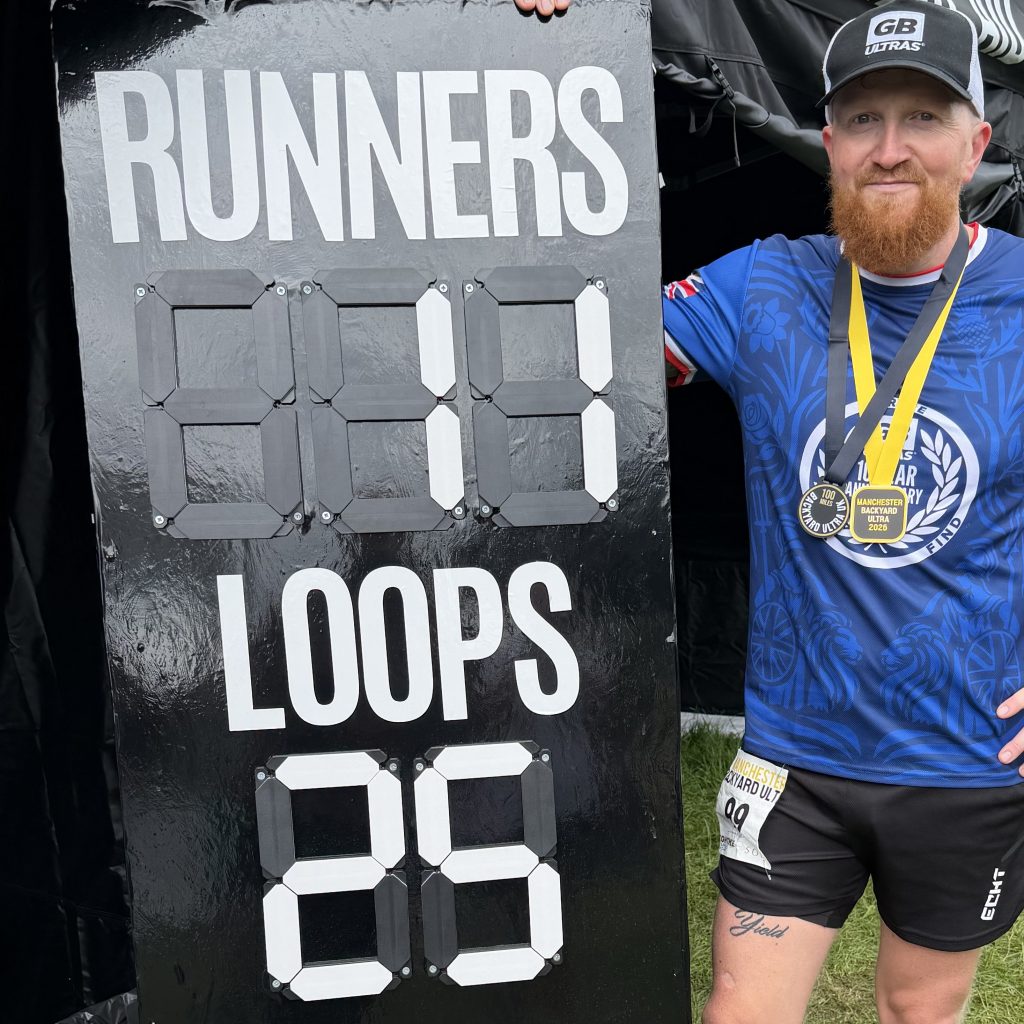
One yard to go before the number I needed. I went out carefully, keeping the effort controlled, ticking off the landmarks I now knew like the back of my hand, the bridge, the turn, the little bridge, the overhanging tree, the bench, the turnoff, the field, home. Yard 24, done. 100 miles in the bag, plus the extra distance from my camp being so far from the corral, 104 miles in total.
I had 10 minutes to recover before the next lap, and physically I still felt okay, the usual aches, nothing alarming. But “okay enough to keep running” and “safe to keep running” are two very different things when your kidney is flagging it up to you in real time.
Calling It
I lined up for yard 25 with ten others still standing. I set off but then turned around and tapped out.
That’s not an easy sentence to write, even now. But I wasn’t willing to gamble lasting kidney damage, or worse, for the sake of one more lap. 24 yards. 104 miles. Third time at this race, and the one where I learned the most about knowing the difference between hurting and harming.
What Worked
- The upgraded base camp. Going from a one-man shelter to a proper 6-man setup with food, drink and somewhere to actually sit down changed the whole experience. If you’re crewing yourself, treat your camp like race-day kit, not an afterthought.
- Pacing strategy. Targeting a steady 50-minute yard and coming in under that gave me a buffer all the way through, right up until I needed to deliberately slow down.
- Variety of food and drink. Not living off the same gel for 24 hours straight makes a genuine difference to morale, not just fuelling.
- Shoe and clothing change strategy. Fresh socks and a shoe swap partway through saved my feet from the kind of damage that ends races on its own.
- Walking breaks through the night. Building these in early, rather than waiting until I was forced to, kept my legs fresher for longer.
What I’d Do Differently
- Too many carbs. Fluid carbs, gels, and real food all stacked on top of each other, more than I actually needed. Something to dial back and be more deliberate about next time.
- Camp too far from the corral. No choice in it this time, but the extra walking cost me roughly 3 minutes a yard, and an estimated 4 extra miles over the race. Next time, I’ll get there earlier and fight harder for a closer pitch.
- A two-week all-inclusive holiday the week before a multi-day race. Not exactly textbook prep, and very possibly part of the picture with how my body responded later on. Lesson noted.
- Build in more structured safety checks. I reacted when the warning sign appeared, but next time I’d be more proactive, tracking wee colour, fluid intake, electrolytes and how often I was going much earlier in the race rather than waiting for something to look obviously wrong.
- Be stricter with effort even when it feels easy. My heart rate was low and the pace felt comfortable, but comfortable isn’t always the same as sustainable. Next time I’d hold back even more in the first 12–18 hours and let the race come to me.
- Give support crew clearer decision rules. Dan was brilliant, but I could make things easier by agreeing non-negotiables in advance, what signs mean slow down, what signs mean stop, and what needs monitoring every hour.
Final Thoughts
Every backyard ultra teaches you something different, and this one wasn’t about how far I could push, it was about recognising the line between discomfort and danger, and actually respecting it when it mattered. 104 miles, 24 yards, and a decision I’m proud of even though it meant walking away from the start line rather than crossing a finish one.