

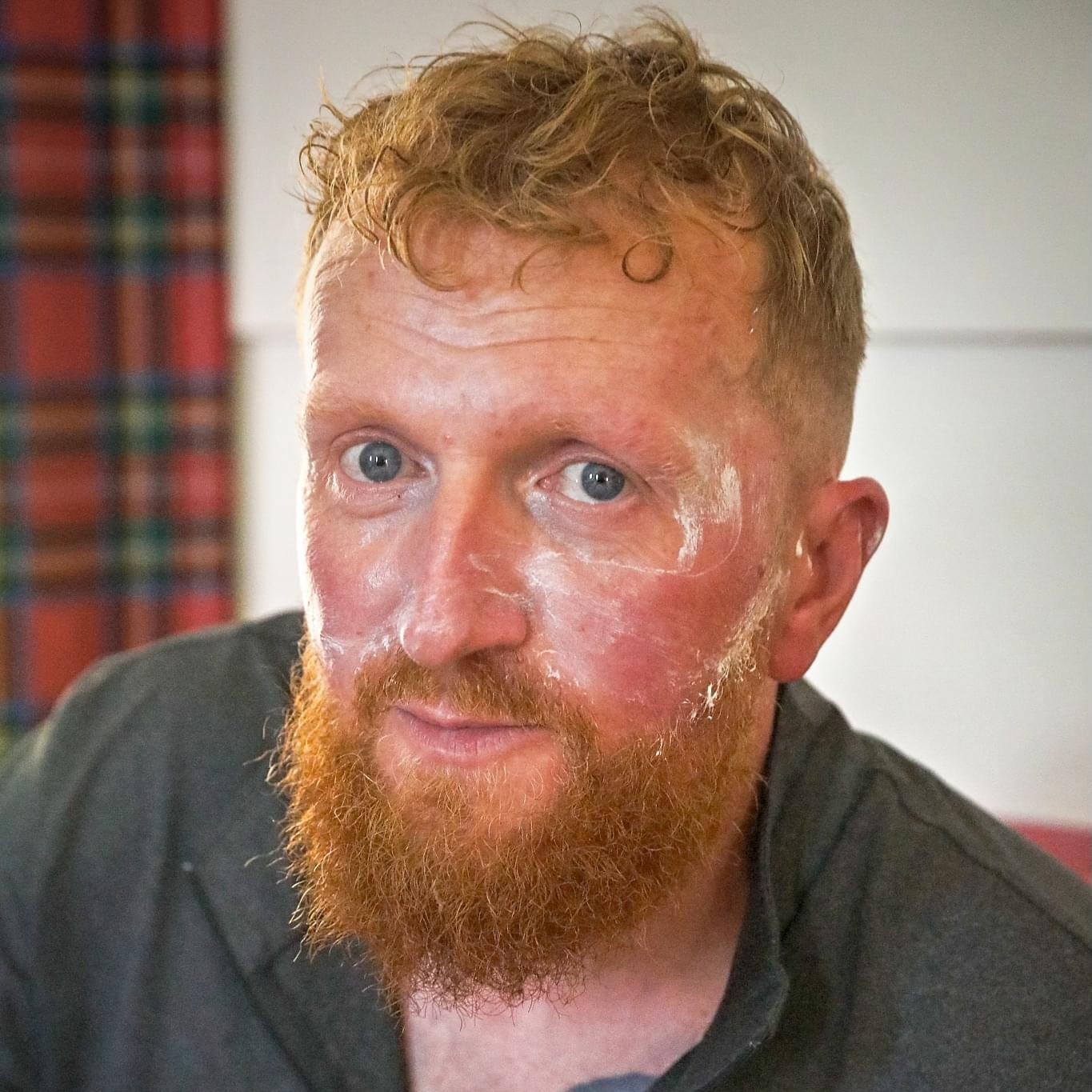
There’s a special kind of suffering reserved for the runner who refuses to adjust their training when summer get into full swing. You know the type. You’ve probably been the type. Heading out at noon in 32°C heat, telling yourself it’s fine, then staggering home looking like you’ve been wrung out and left to dry on a radiator.
Hot weather running doesn’t have to be like that. In fact, done right, training through a heatwave can actually make you a stronger, more efficient runner. But it demands a different approach and a willingness to let your ego take a back seat for a while.
Here’s everything you need to know.
Why Heat Hits Different
Before I get into the practical stuff, it helps to understand what’s actually happening in your body when the temperature climbs.
In normal conditions, your cardiovascular system has one main job: deliver oxygenated blood to your working muscles. In the heat, it suddenly has two jobs, it also has to pump blood to the skin to cool you down. Those two demands compete with each other. The result? Your heart rate climbs for the same pace. Your perceived effort spikes. Your performance drops.
Add to that the fluid loss through sweat, which can exceed a litre per hour in serious heat, and you’ve got a recipe for premature fatigue, cramping, and if you’re really not paying attention, heat exhaustion.
The good news. Your body adapts. In as little as 10–14 days of consistent heat exposure, you’ll see meaningful physiological changes, increased plasma volume, earlier onset of sweating, lower core temperature at the same effort. This is called heat acclimatisation, and it’s genuinely one of the most powerful free performance tools available to any runner.
But you have to earn it gradually and sensibly.
Rule #1: Slow Down (And Mean It)
This is the one nobody wants to hear, but it’s the most important thing on this list.
Your easy pace in 10°C is not your easy pace in 28°C. The effort is higher. The stress on your system is greater. Trying to hit the same splits you’d manage on a crisp autumn morning is how you end up in a heap at the side of the road.
A rough guide, for every 5°C above your comfortable training temperature, expect a pace slow-down of 20–30 seconds per kilometre and accept it without guilt. This isn’t weakness. This is physiology.
In hot weather, train to effort, not pace. If you run by heart rate, use it religiously. Your easy zones are where you want to be right now. The sessions that count are the ones where you finish feeling like you could have gone further, not the ones where you heroically dragged yourself home on fumes.
Rule #2: Hydrate Before You’re Thirsty
Thirst is a lagging indicator. By the time you feel thirsty during a run, you’re already dehydrated enough for it to be affecting your performance.
The solution is to front-load your hydration. Start drinking water consistently in the hours before you head out. Aim to arrive at your run already well-hydrated, clear or pale yellow urine is your target.
During the run itself. Carry more fluid than you think you need. For anything over 45 minutes in the heat, electrolytes matter, sodium, in particular, is what keeps you absorbing fluid properly rather than just losing it straight through. Don’t wait until you feel rough to drink, take regular small sips.
And don’t forget post-run rehydration. Weigh yourself before and after a long hot effort if you want a precise guide, every kilogram of weight lost equates to roughly a litre of fluid deficit. I do this after every long run as part of understanding what recovery is needed. Replacing that, along with the electrolytes lost through sweat, is part of the training session itself.
Rule #3: Time Your Runs Wisely
This one is simple but transformative.
If the temperature is going to hit 30°C by midday, don’t run at midday. Early morning and evening are your windows. Pre-sunrise runs during a heatwave aren’t just pleasant, they’re a completely different physiological experience.
If you have to run in the heat of the day, say, you’re training for a race that takes place in hot conditions, then do it deliberately, as acclimatisation work, at reduced intensity. Know that you’re accumulating heat adaptation, not fitness, and pace yourself accordingly.
Shade matters too. A tree-lined trail in 30°C is a different world from exposed tarmac at the same temperature. If you have the option, take the cooler route.
Rule #4: Pre-Cool and Mid-Cool
This is an elite secret that’s actually very simple. And works brilliantly.
Pre-cooling. Lowering your core temperature before you run, can significantly extend the amount of time before you hit your thermal limit. A cold shower or a dip in the ice bath before heading out, an iced drink in the 30 minutes before your run or even cooling your wrists and neck with cold water can all help.
During longer efforts, mid-cooling strategies include. Pouring cold water over your head and wrists at aid stations (or water fountains). Carrying a spray bottle. Ice in your vest or pack. Wet bandana around the neck. You’ve seen the elites putting ice bandanas around their necks in big overseas races?
None of this is complicated, but it can be the difference between a productive session and just surviving.
Rule #5: Dress for the Conditions
What you wear matters more than you might think.
Light colours reflect heat. Dark colours absorb it. Simple. In a heatwave, you want light, loose, moisture-wicking fabric that allows airflow across the skin. Less coverage generally means less heat retention, but factor in sun protection, particularly for longer outings where UV exposure becomes a real issue. Especially for fairer skinned individuals!
A lightweight cap or visor is a must. It shades your face and, if you soak it in cold water, provides meaningful cooling to your head.
Leave the black compression tights at home until October.
Rule #6: Know the Warning Signs
There’s a spectrum between “hot and uncomfortable” and “genuinely dangerous,” and you need to know where the line is.
Heat Exhaustion. Heavy sweating, weakness, cold/pale/clammy skin, a fast and weak pulse, nausea, is your body telling you to stop immediately. Get into the shade, drink fluids, cool your skin. It’s serious but manageable if caught early.
Heat Stroke. Is the next level and it’s a medical emergency. The sweating stops. Skin becomes hot and red. Confusion, loss of consciousness. This requires immediate emergency assistance.
Know the signs. Run with others when it’s stupidly hot. Tell someone your route if you’re going alone. And if something feels wrong, genuinely, deeply wrong, just stop. A missed session costs you nothing. Heat stroke can cost you everything.
The Upside: Heat Makes You Fitter
Here’s the thing nobody talks about enough. Training through a heatwave, done sensibly, is genuinely good for you as a runner.
Heat acclimatisation increases plasma volume, which means more blood, delivering more oxygen to your muscles. It improves your sweat response, your body’s ability to regulate temperature and your efficiency at the same effort levels. Some studies suggest that heat adaptation can produce performance benefits comparable to altitude training.
When you come out the other side of a hot spell and race in normal conditions, you’ll be carrying some of those adaptations with you. The blood volume gains in particular can last for weeks.
So while it’s tempting to park the training until it cools down, the runners who adjust, adapt, and push through intelligently are the ones who come out of summer in better shape than they went in.
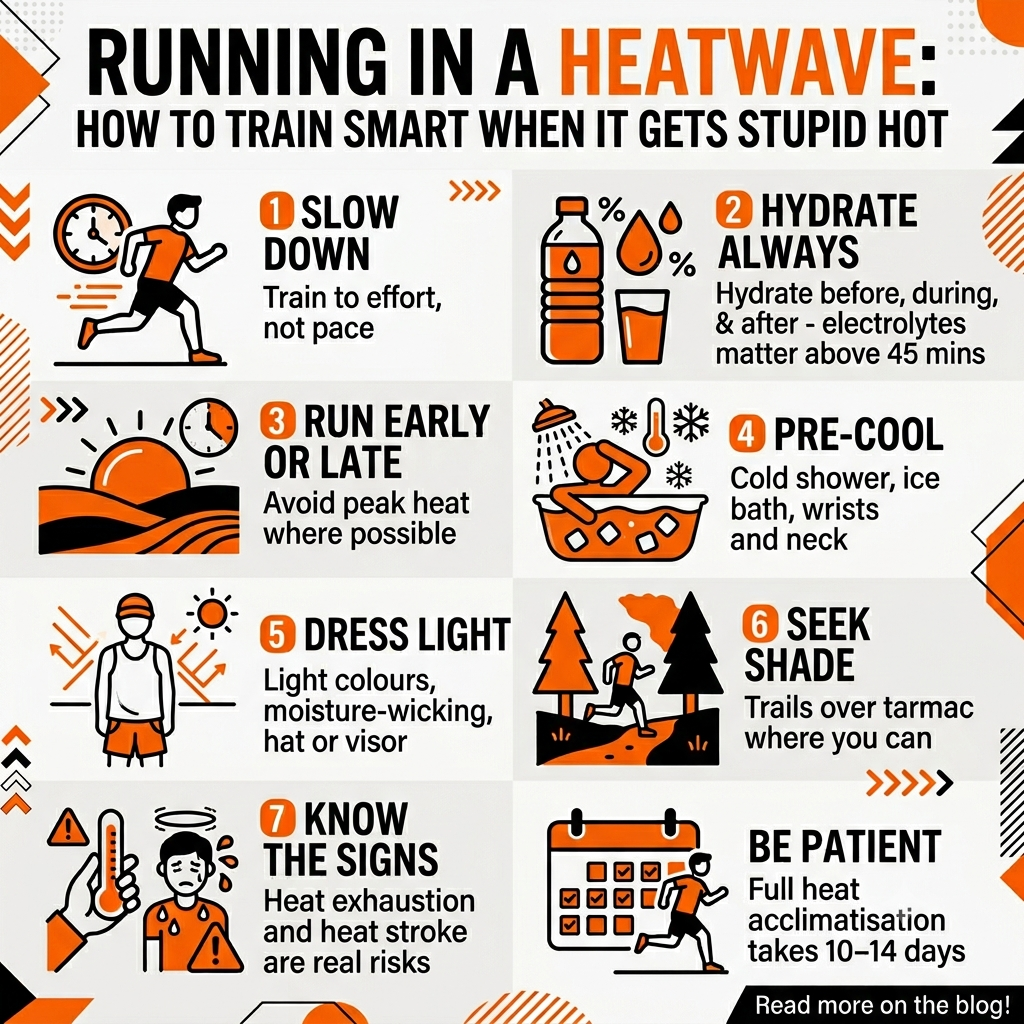
Hot Weather Running – Quick Tips
The heatwave will break eventually. When it does, the runners who adapted will have earned something the ones who stayed inside watching TV didn’t. A little discomfort now, handled smart, pays dividends when it matters.
Stay cool. Run smart. Keep pushing in your pursuit of the impossible.